An air tightness tester is a device used to measure whether a test piece has leakage defects. Its principle is to place the test piece under vacuum or pressure conditions and use sensors such as differential pressure sensors or mass flow meters to test whether there are voids, cracks, or other issues inside the test piece. We will introduce the air tightness tester from multiple perspectives.
When an object is placed in a vacuum or high-pressure environment, tiny leaks may occur if its surface is rough or it contains internal cavities. In such cases, an air tightness leak detector can be connected to the test item to observe, record data, and analyze it, thereby determining whether a leak problem exists.
The principle of an air tightness leak detector is based on the measurement of gas pressure differential, determining whether a leak exists by detecting the pressure difference between the inside and outside of the object under test. Common air tightness leak detectors mainly include the pressure decay method, the mass spectrometry method, and the bubble method, among others.
1. Pressure decay method: This method applies a certain pressure to the object under test and then measures the rate of pressure drop to determine whether a leak exists. When a leak is present in the object, the pressure drops rapidly; by measuring the rate of decline, the extent of the leak can be determined.
2. Mass spectrometry: This method connects the object under test to a mass spectrometer, using the instrument's high sensitivity to detect gas composition within the object and thereby determine whether a leak exists. When a leak is present in the object under test, the mass spectrometer can detect the presence of the leaking gas.
3. Bubble test: This is a simple and intuitive leak detection method. A layer of liquid is applied to the surface of the object under test, and the appearance of bubbles on the liquid surface indicates a leak. This method is suitable for relatively large leak points or surface leaks.
Air leak detectors have a very wide range of applications, mainly in the following fields:
1. Manufacturing: During the manufacturing process, air tightness leak detectors can be used to test the sealing performance of products, such as engines, fuel systems, and air conditioning systems in automotive manufacturing, as well as electronic products and aerospace products.
2. Medical industry: During the manufacturing and use of medical equipment, air tightness testers can be used to test the sealing performance of equipment, such as medical oxygen cylinders, infusion devices, ventilators, etc.
3. Petrochemical industry: During the manufacturing and operation of petrochemical equipment, air tightness leak detectors can be used to test the sealing performance of equipment, such as storage tanks, pipelines, valves, etc.
4. Environmental protection: In environmental monitoring, air tightness testers can be used to test the sealing performance of sewage treatment equipment, waste gas treatment equipment, etc., to ensure the normal operation of the equipment and environmental safety.
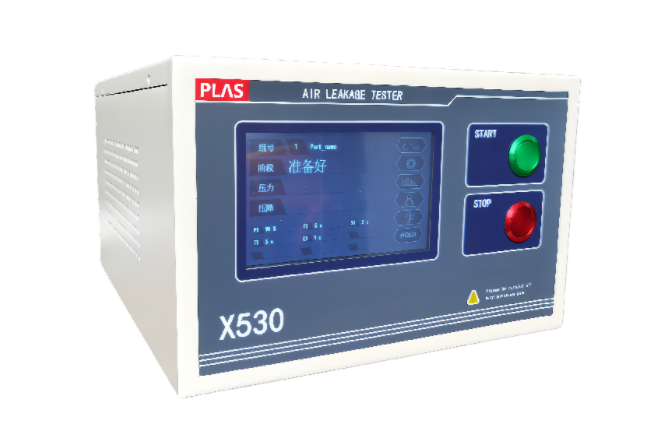
In summary, the principle of an air tightness leak detector is based on the measurement of gas pressure differential, determining whether a leak exists by detecting the pressure difference between the inside and outside of the object under test. It is widely used in fields such as manufacturing, the medical industry, the petrochemical industry, and environmental protection.

WeChat for technical support

PLUS Douyin