The detection methods of air tightness leak detectors mainly include differential pressure and direct pressure types. Currently, the differential pressure type is widely adopted, which uses a differential pressure sensor to detect the amount of gas leakage. Air tightness leak detectors are generally used for the air tightness testing of gas appliances and bottles and cans in the pharmaceutical industry, thereby ensuring user safety. The following is a brief introduction to the detection principle of air tightness leak detectors.
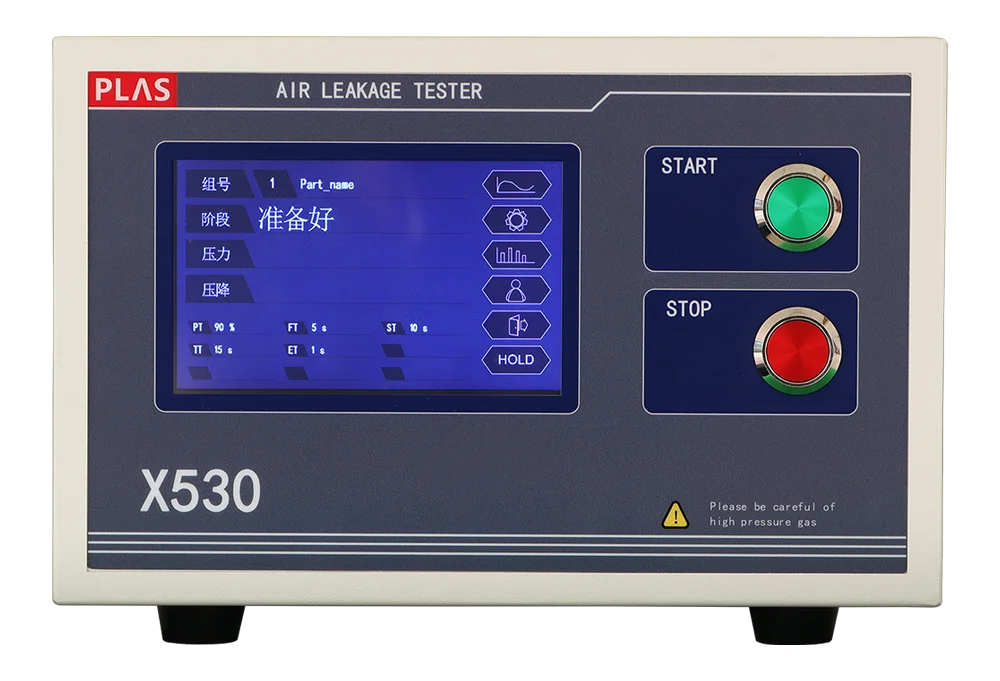
The differential pressure air tightness tester works by filling a sealed cavity with compressed air at a set pressure and detecting leaks by measuring changes in internal pressure or flow rate.
The main function of a differential pressure air tightness leak detector is to detect the gas leakage rate of sealed containers, and it generally uses a high-accuracy differential pressure sensor as the detection element. By simultaneously performing inflation, balance, and detection exhaust processes at both the reference object and the test object ends, it detects the pressure decay between the reference object and the test object, then calculates the leakage rate through a measurement model and outputs it to the instrument's display unit. The detection steps of a differential pressure air tightness leak detector are as follows: first place the air tightness leak detector in the laboratory for at least 1 h, and after preheating, connect the workpiece under test to the test object side. Adjust the detection pressure to the specified pressure point (generally the corresponding detection pressure point should be selected according to the relevant standards of the workpiece under test). Start the leak detector, set the inflation, balance, detection, and exhaust times, manually input the cavity volume of the workpiece under test when necessary, then set parameters such as the leakage rate or pressure decay range used to determine whether the workpiece is qualified, and then run and record the leakage rate displayed by the air tightness leak detector.
In addition, since differential pressure air tightness leak detectors are easily affected by various factors such as temperature and air pressure during testing, which can cause deviations in their measurement data, the following measures can be considered to improve the detection accuracy of the leak detector:
(1) Install a digital pressure gauge or pressure sensor with a higher accuracy class at the outlet of the pressure reducing valve to indicate the test pressure, thereby improving the accuracy of the test pressure and reducing the measurement error of the leakage allowance;
(2) Improving the measurement accuracy of the tested volume can reduce the leakage rate error;
(3) When multiple repeated tests are required, the interval between each test should be at least 8s.
In summary, when using an air tightness leak detector for leak rate testing, optimal test parameters can be determined through multiple tests and then set, so as to reduce the measurement error of the leak rate.

WeChat for technical support

PLUS Douyin