SealingAir tightnessThe two commonly used testing methods for leak testers are the differential pressure method and the negative pressure method.
1. Differential pressure method: This method applies different pressures on both sides of the object under test and uses the pressure difference to detect its air tightness. The air tightness performance of the object under test is evaluated by measuring the pressure difference and leakage flow rate.
2. Negative pressure method: This method establishes a negative pressure environment inside the object under test and evaluates air tightness by detecting pressure changes within the negative pressure environment. When there is a gas leak in the object under test, the pressure in the negative pressure environment will change, and the air tightness performance can be judged by measuring the pressure change.
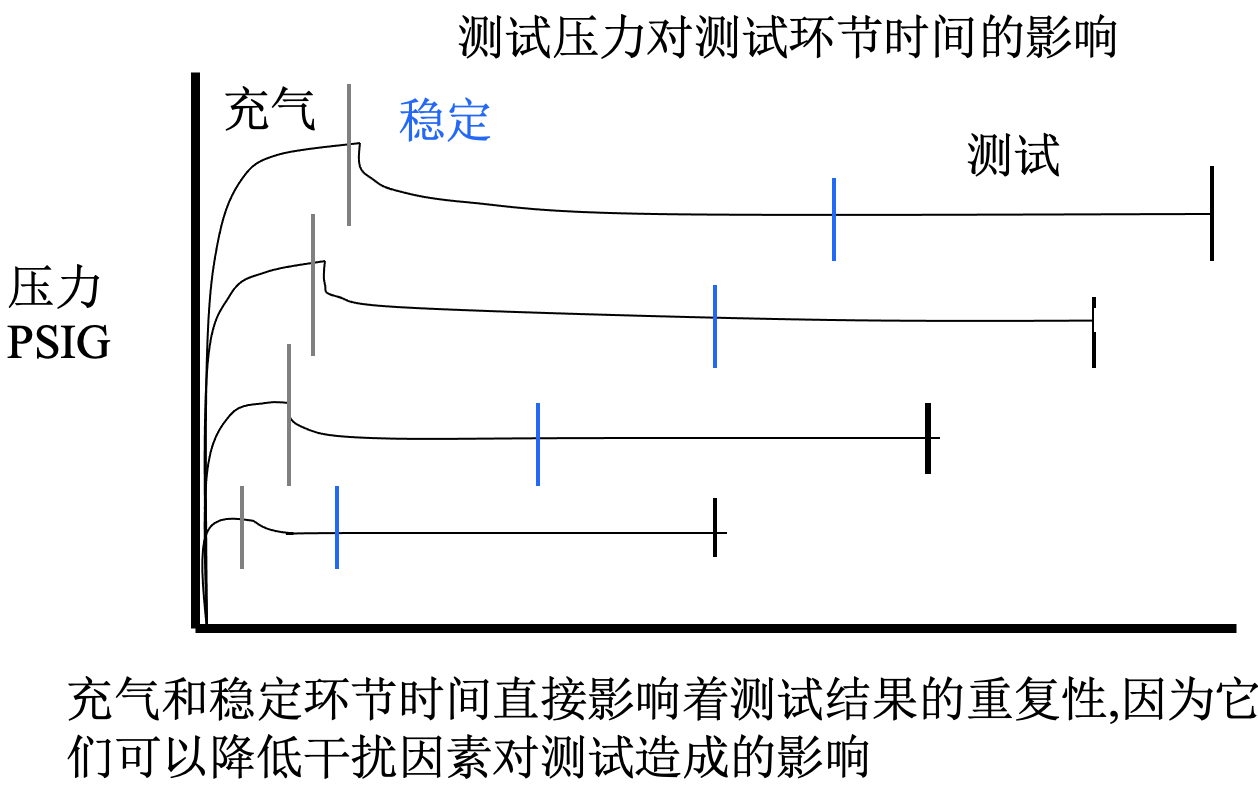
The principles of the pressure differential method and the negative pressure method for a sealing air tightness tester are as follows:
1. Differential pressure method principle: This method applies different pressures to both sides of the object under test and uses the pressure difference to detect the air tightness of the object under test. The specific principle is as follows:
- First, connect the object under test to the testing instrument to form a sealed system.
- Then, apply high pressure to one side of the object under test and low pressure to the other side.
- When the object under test has a gas leak, the gas flows from the high-pressure side to the low-pressure side, causing a change in the differential pressure.
- Evaluate the air tightness performance of the object under test by measuring differential pressure and leak flow rate.
2. Negative pressure method principle: This method establishes a negative pressure environment inside the object under test and evaluates air tightness by detecting pressure changes within the negative pressure environment. The specific principle is as follows:
- First, connect the object under test to the testing instrument to form a sealed system.
- Then, a negative pressure environment is created inside the object under test, so that the internal pressure of the object is lower than the external ambient pressure.
- When the object under test has a gas leak, external air enters the interior of the object, causing a pressure change in the negative pressure environment.
- Evaluate the air tightness performance of the object under test by measuring pressure changes.
Typically, based on the common principles of sealing and air tightness testers, suitable test methods can be selected according to different applications and requirements to evaluate the air tightness performance of the object under test.
A sealing air tightness tester is an instrument used to evaluate the air tightness performance of the object under test. Its principle is to apply pressure or negative pressure and observe changes in the pressure difference between the inside and outside of the object under test or detect gas leakage to evaluate air tightness.

Sealing air tightness testers have a wide range of applications, and common application areas include:
1. Construction engineering: Used to test the air tightness performance of building exterior walls, windows, doors, etc., to ensure the building's insulation performance and energy efficiency.
2. Automotive industry: Used to test the air tightness of car bodies, windows, doors, etc., to ensure vehicle sealing and reduce wind noise.
3. Electronic devices: Used to test the air tightness of electronic device enclosures, connectors, etc., to ensure the dustproof and waterproof performance of the devices.
4. Medical devices: used to test the sealing performance of medical devices to ensure their safety and effectiveness.
5. Packaging industry: used to test the sealing performance of packaging containers to ensure product quality and freshness.
6. Aerospace industry: used to test the sealing performance of aircraft and spacecraft to ensure their safety and air tightness.
PassedSealing and air tightnessThe application of the tester allows evaluation of the air tightness performance of the object under test, ensuring it meets relevant standards and requirements and improving product quality and performance.

WeChat for technical support

PLUS Douyin