On January 23, according to a report released by IDC on January 22 local time, the Global Humanoid Robot Market Analysis, the global humanoid robot market grew rapidly in 2025, with shipments of approximately 18,000 units and sales of approximately US$440 million (Note: approximately RMB 3.071 billion at current exchange rates), a year-on-year increase of approximately 508%, with Chinese manufacturers dominating.
AGIBOT and Unitree Robotics shipped approximately 5,000 units each, placing them at the forefront; manufacturers such as Leju Robotics, Booster Robotics, and Songyan Power shipped in the range of about a thousand units, while international manufacturers remain in the pilot stage. Full-size bipedal robots contributed the largest share of sales revenue, with AGIBOT as the industry leader.
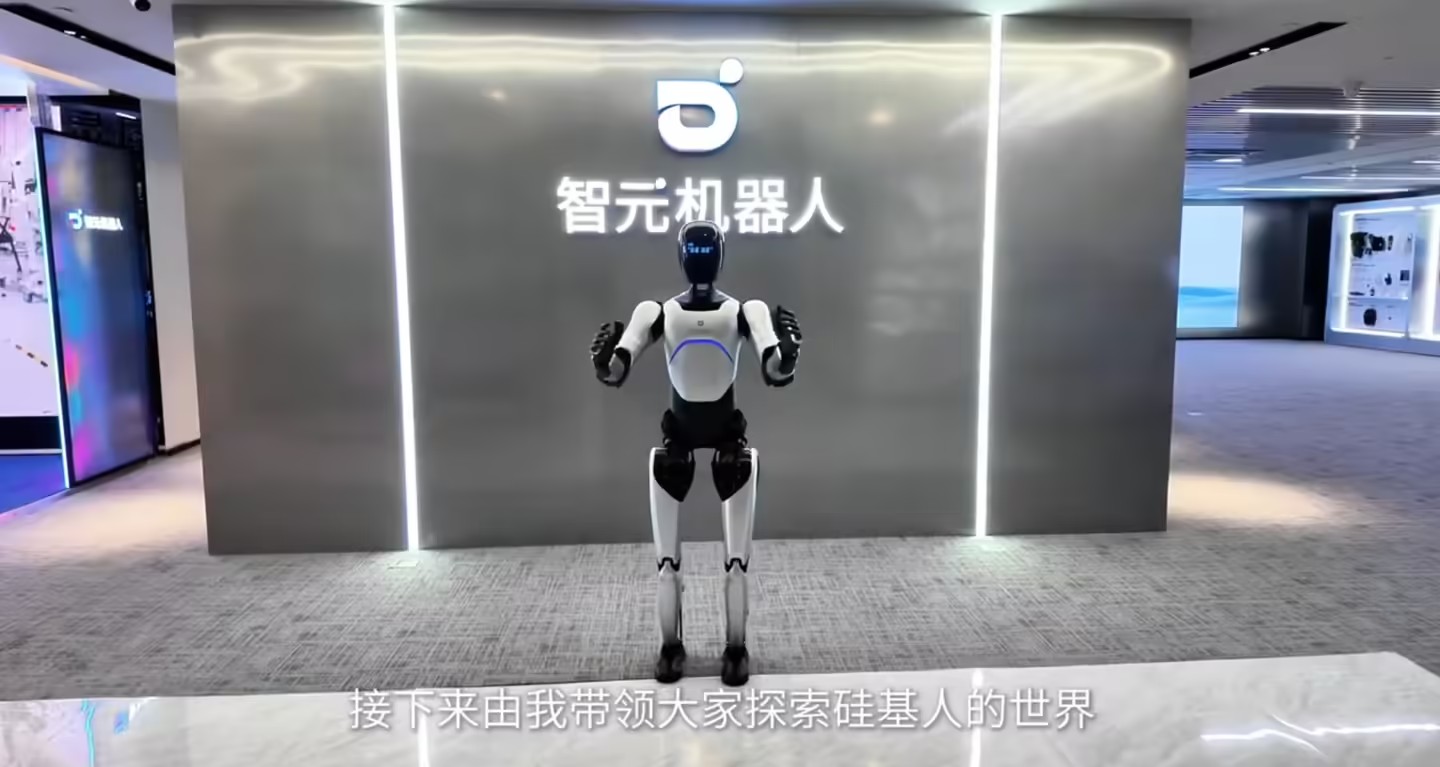
In terms of applications, entertainment commercial performances, education and research, data collection, and guided tours and shopping assistance were the main deployment scenarios in 2025; the business model is evolving from one-time hardware sales toward RaaS, operations and maintenance services, and a platform-based ecosystem, achieving parallel development of "product + service + ecosystem."
The report points out that humanoid robots are transitioning from laboratory validation to engineering deployment. The body, cerebellum (motion control), and cerebrum (cognition and decision-making) are developing in coordination. The fine dexterity of the upper-limb system is the core breakthrough point, while the lower-limb system seeks a balance between general capabilities and engineering efficiency. Modular and lightweight design enhances system stability and deployability. An end-to-end embodied intelligence large model integrating the cerebrum and cerebellum enables a closed loop of multimodal perception, task understanding, and action execution, driving autonomous operation and human-robot collaboration in complex scenarios. Humanoid robots represent the advanced form of embodied intelligence general-purpose robots, embodying the highest pursuit of robotics technology in terms of morphological versatility, task generalization capability, and the level of human-robot collaboration.

WeChat for technical support

PLUS Douyin