The battery pack is the core component of a new energy vehicle. It is made up of several battery modules (also called battery units) that together supply the energy the vehicle needs. Each module normally contains a number of cells connected in series and parallel to provide the required voltage and capacity.To prevent electrolyte leakage from battery modules, PLUS has developed a dedicated new energy air tightness tester. Air tightness testing of the module shows whether the battery leaks, which is particularly important for polymer batteries.
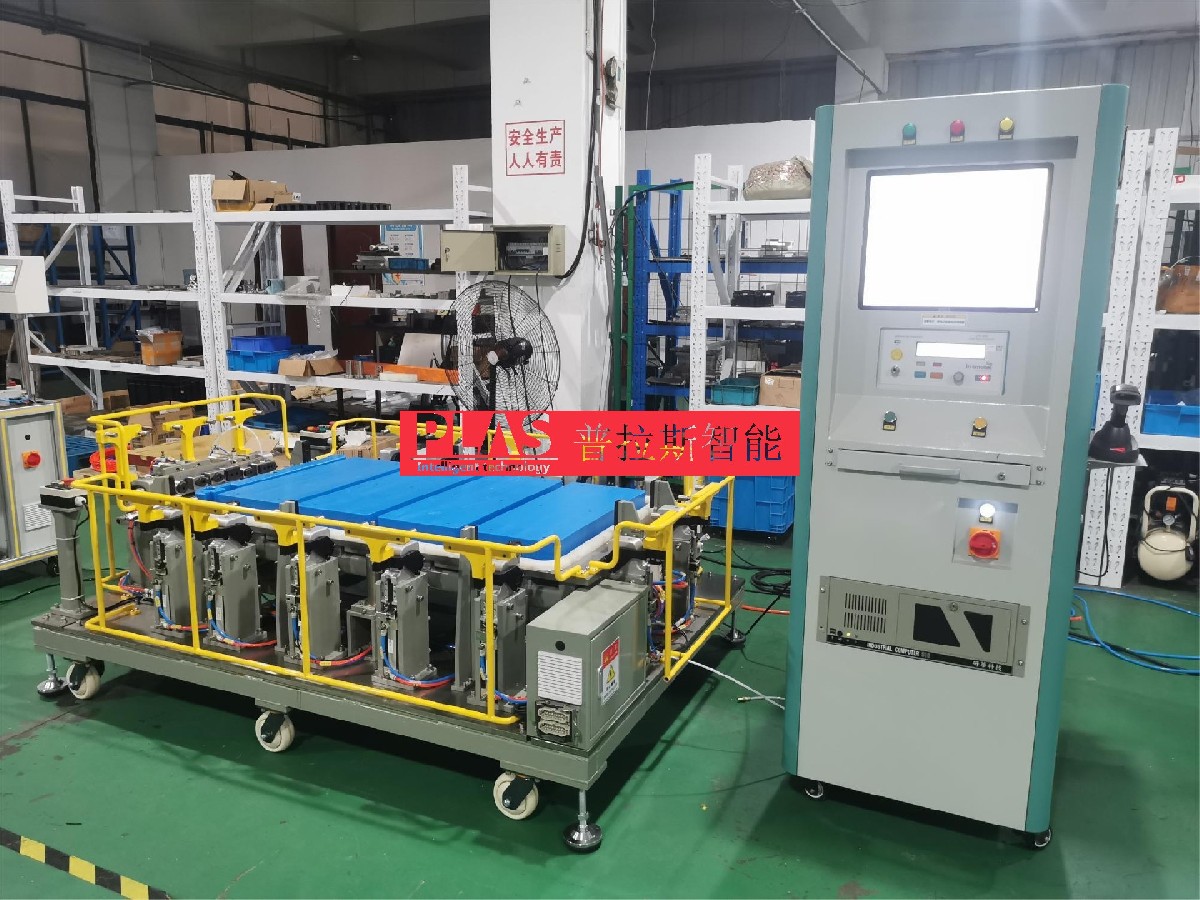
One commonly used battery module air tightness test method:
1. Prepare the test set-up: a sealed test chamber, usually a container or test box with good air tightness.
2. Prepare the test liquid: choose a suitable liquid, typically liquid nitrogen or another volatile liquid.
3. Prepare the module: place the battery module in the test chamber and make sure the chamber is sealed.
4. Close the chamber: seal the test chamber so that no gas escapes.
5. Apply vacuum: use a vacuum pump or vacuum system to evacuate the chamber and create a vacuum.
6. Observe the pressure: if the pressure stays stable the module is well sealed; if it drops, there is a leak.
7. Test time: observe the pressure over a set period as required to ensure accuracy.
8. Analyse the result: judge from the pressure change whether the module passes. If it leaks, investigate and repair it.
Note that battery module air tightness testing must be carried out in a professional laboratory or service centre to ensure safety and accuracy, and the module must be protected from damage or contamination.
The benefits of battery module air tightness testing include:
1. Safety: good sealing prevents gas or electrolyte from escaping, reducing the risk of fire or explosion.
2. Performance and life: good sealing keeps contamination out and the internal environment stable, reducing corrosion and damage and extending battery life.
3. Environment and health: leaked gas or electrolyte can harm the environment and people, so testing finds and fixes leaks early.
4. Product quality and reliability: sealing performance is a key quality indicator, and testing helps ensure reliable products and satisfied customers.
5. Compliance: many countries and regions set regulations and standards for module sealing performance, and testing keeps products compliant.
Automated air tightness equipment such as the PLUS automated system improves efficiency and accuracy, making sure every module is strictly tested before it is assembled into the pack. This is essential for the overall performance and safety of the traction battery pack.

WeChat for technical support

PLUS Douyin