One-sentence answer: The interior of an on-board charger (OBC) housing contains high-voltage power circuits. Water ingress at any point—the upper and lower cover sealing rings, the high-voltage terminal through-holes, or the potting surface—will reduce insulation resistance or even cause high-voltage breakdown. Using a CTS Sentinel A28 differential pressure leak detector to test housing air tightness by comparing a master part with the part under test can offset misjudgments caused by production line temperature fluctuations to the greatest extent, making it suitable for 100% inspection on high-takt OBC final assembly lines.
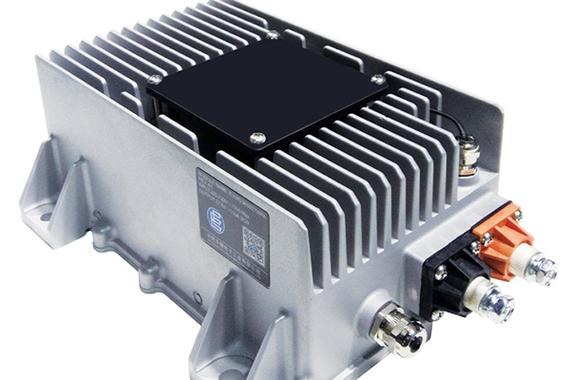
High-voltage power circuits inside: a leak at the cover seal, terminal feed-through or potting face lowers insulation resistance
Unlike ordinary electronic control housings, an OBC contains high-voltage rectification and power conversion circuits. Even a trace of moisture ingress can cause insulation degradation, so the production line must perform 100% inspection rather than sampling inspection.
High-voltage input and output terminals require sealing rings or potting when passing through the housing. Deflection, burrs, or scratches during terminal press-fitting can damage the seal, and visual inspection cannot detect them.
The same housing has both static sealing rings at the upper and lower covers and potting at the terminals plus welded sealing of the liquid cooling channel. Different locations have different leak paths, requiring separate test programs and separate judgments.
OBC production lines are usually connected in series with electrical safety testing. If the air tightness testing station takes too long, the entire line's capacity is held back, so testing time must be compressed while maintaining stable judgment.
Main sealing locations:
Consequences of leakage: moisture or coolant enters the cavity, insulation resistance decreases, the risk of creepage and breakdown rises, and the busbar and solder joints corrode. In severe cases, partial discharge and fire may occur; leakage also means the battery pack's IP protection rating is not up to standard.
OBC housings are workpieces with small volume, high takt time, and multiple sealing forms. Differential pressure comparison can solve both stability and takt time issues at the same time:
If multiple test methods need to be combined in series within one instrument (for example, vacuum decay on the housing first, then pressure decay on the liquid cooling channel), consider the multi-function single-station model I28; for vacuum decay testing of a single part with a single method only, the C28 is also a common configuration.
Usually the air tightness test is performed first, then the part enters the electrical safety station. In this way, nonconforming housings are intercepted before live testing, avoiding risks caused by moisture or leaking parts during high-voltage testing and preventing the electrical station from being occupied by irreparable housings.
Yes. Insufficient sealing ring compression directly manifests as excessive leakage from the cavity. The air tightness test uses the overall leak rate as the criterion and does not depend on the specific dimensions of the sealing ring. As for whether the compression is too small or locally over-compressed, segmented plugging or disassembly inspection is needed to locate it.
The test pressure is set according to the allowable values of the housing and internal components, and generally a pressure far below the structural limit is selected to complete the judgment. The key is to first write the pressure upper limit into the product process document, then control it uniformly through the test program, avoiding arbitrary increases on site.
For OBC housing sealing tests, the focus is on intercepting defects at terminal through-holes and sealing ring mating faces before live testing. The differential pressure comparison structure of the CTS Sentinel A28, combined with 32 test programs, can stably distinguish true leaks from temperature drift on high-takt production lines, meeting the requirements for 100% inspection and traceability of power electronics products for new energy vehicles.

WeChat for technical support

PLUS Douyin