As drones penetrate deeply from consumer-level aerial photography into industrial scenarios such as agricultural plant protection, power line inspection, maritime rescue, and surveying and exploration, the environmental tolerance of the equipment has become a core performance metric. Waterproof performance directly determines the operational boundaries, service life, and mission reliability of drones, and is the key dividing line that distinguishes toy-grade from industrial-grade products.
Referring to the IEC 60529 standard, the drone industry generally uses IP ratings to define waterproof capabilities, with different ratings corresponding to clearly defined operating condition boundaries:
| IP rating | Protection capability | Typical Application Scenarios |
|---|---|---|
| IP54/IPX4 | Splash-proof | Consumer-grade aerial photography drones in light drizzle conditions can only handle brief, sporadic rainfall. |
| IP65 | Complete dust protection + resistance to low-pressure water jet spray | Routine outdoor inspection and security patrol scenarios |
| IP67 | Totally dust-tight + short-term immersion in 1 m of water for 30 minutes | The mainstream standard configuration for agricultural plant protection, maritime operations, and rainy-day inspection drones. |
| IP68 | Completely dust-tight + continuous deep-water immersion under specified conditions | Underwater drones, specialized flood control and rescue equipment |
A reliable waterproof design can increase the mean time between failures (MTBF) of drones by2~3 times, significantly reducing the probability of downtime during outdoor operations. For industrial-grade drones, waterproofing capability directly affects operational availability: during agricultural plant protection seasons when timing is critical, power line inspections racing against deadlines, and emergency rescue operations where every second counts, equipment downtime caused by waterproofing failure leads to direct economic losses and mission delays.
The drone has a complex structure, many moving parts, and a high degree of electronic integration. Its waterproof design follows"Structural sealing as the primary approach, material protection as the secondary, and redundant design as the fallback"principle, forming a multi-layered protection system from the complete machine down to individual components.
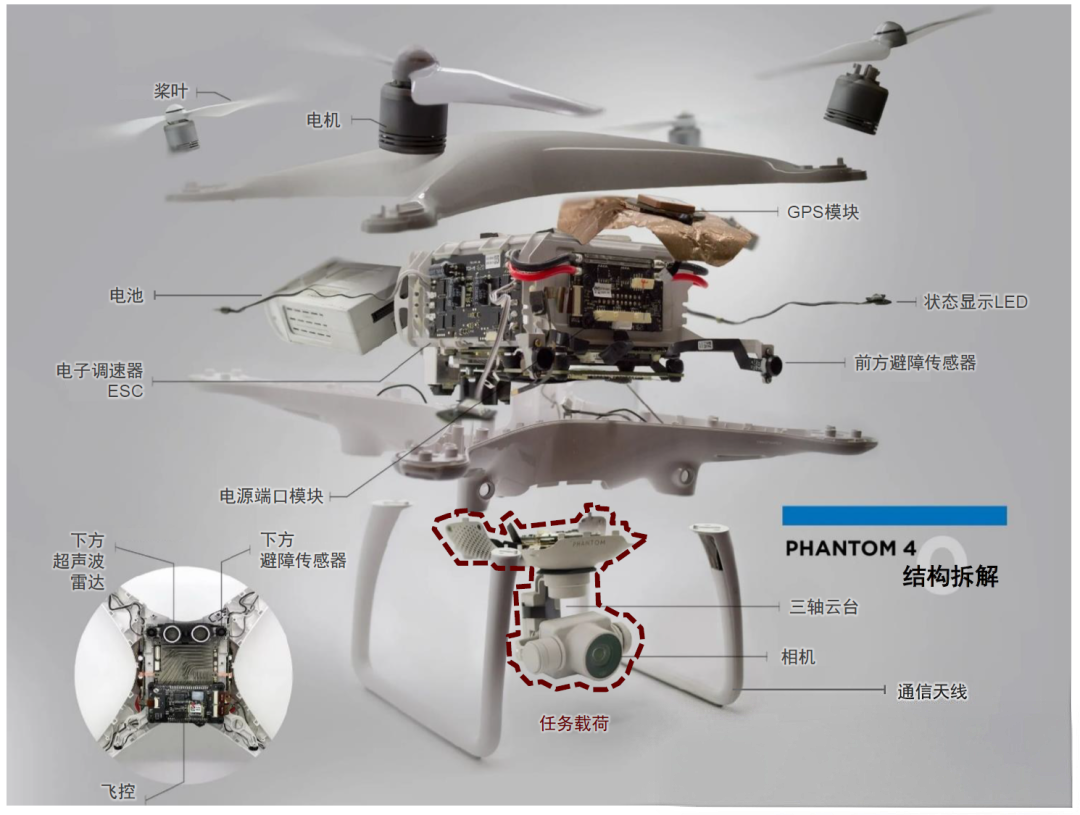
Schematic of the multi-layer waterproof protection system for the complete unit housing, power motor, gimbal module, electronic system, etc.
Static sealing is the first core barrier for drone waterproofing, covering all fixed joint surfaces. Its process maturity directly determines the baseline waterproof rating of the entire unit.
Motor shafts, gimbal rotation shafts, servo output shafts and other moving parts are the weak points in waterproofing and also the most technically challenging part of the process.
For internal circuit boards and core modules, the industry generally adopts a three-level protection system of "coating - potting - connectors" to withstand harsh environments such as condensation, salt spray, and pesticide corrosion.
Cameras, obstacle-avoidance sensors, radar, and other optical components mounted on drones have dual requirements for both waterproofing and anti-fogging.
Waterproof failure in drones is not simply "water damage" — it triggers a cascading chain of functional, safety, and economic risks, with consequences being especially severe in industrial-grade applications.
Moisture intrusion into the ESC and flight controller mainboards can cause circuit shorting, signal disruption, and abnormal power output, directly leading to loss of attitude control mid-flight or even a crash. This not only results in tens of thousands of yuan in equipment damage, but a fall from high altitude may also threaten the safety of people and property on the ground, triggering safety liability incidents.
When the IMU (inertial measurement unit), barometer, and GPS module are exposed to moisture, issues such as positioning drift, inaccurate attitude data, and altitude hold failure can occur. For agricultural plant protection drones, this can lead to missed spraying, over-spraying, and route deviation; for power line inspection drones, it may cause deviation from safe distances, resulting in line collision accidents and complete mission failure.
Pesticide and fertilizer components in agricultural plant protection scenarios, and salt spray in maritime scenarios, can intrude into the equipment interior along with water vapor, rapidly corroding motor windings, metal connectors, and circuit board solder pads. Data shows that plant protection drones without effective waterproofing have an average service life of less than that of normal equipment in highly corrosive environments.1/3, the rework rate of motors and ESCs increases4x or more。
Condensation and fogging inside the lens can cause blurred aerial footage and invalid inspection imagery. In mission scenarios such as surveying, inspection, and search and rescue, this directly results in the loss of data for an entire flight route and delays work progress. Repeated condensation can also corrode the lens coating, permanently degrading optical performance.
If sealing process control is not strict during mass production, batch waterproof defects will lead to concentrated after-sales repairs, resulting in high costs for parts, labor, and logistics. Severe quality issues will also undermine customer trust and cause long-term negative impact on brand reputation.
The traditional water immersion method can only qualitatively identify severe leaks and cannot detect micron-level micro-leaks. Moreover, parts must be dried after testing, resulting in extremely low efficiency that cannot meet the full inspection requirements of mass production.Dry air tightness testingIt has become the standard solution for waterproof quality control in the drone industry, serving as the core support for IP rating certification, mass production quality control, and process iteration and optimization.
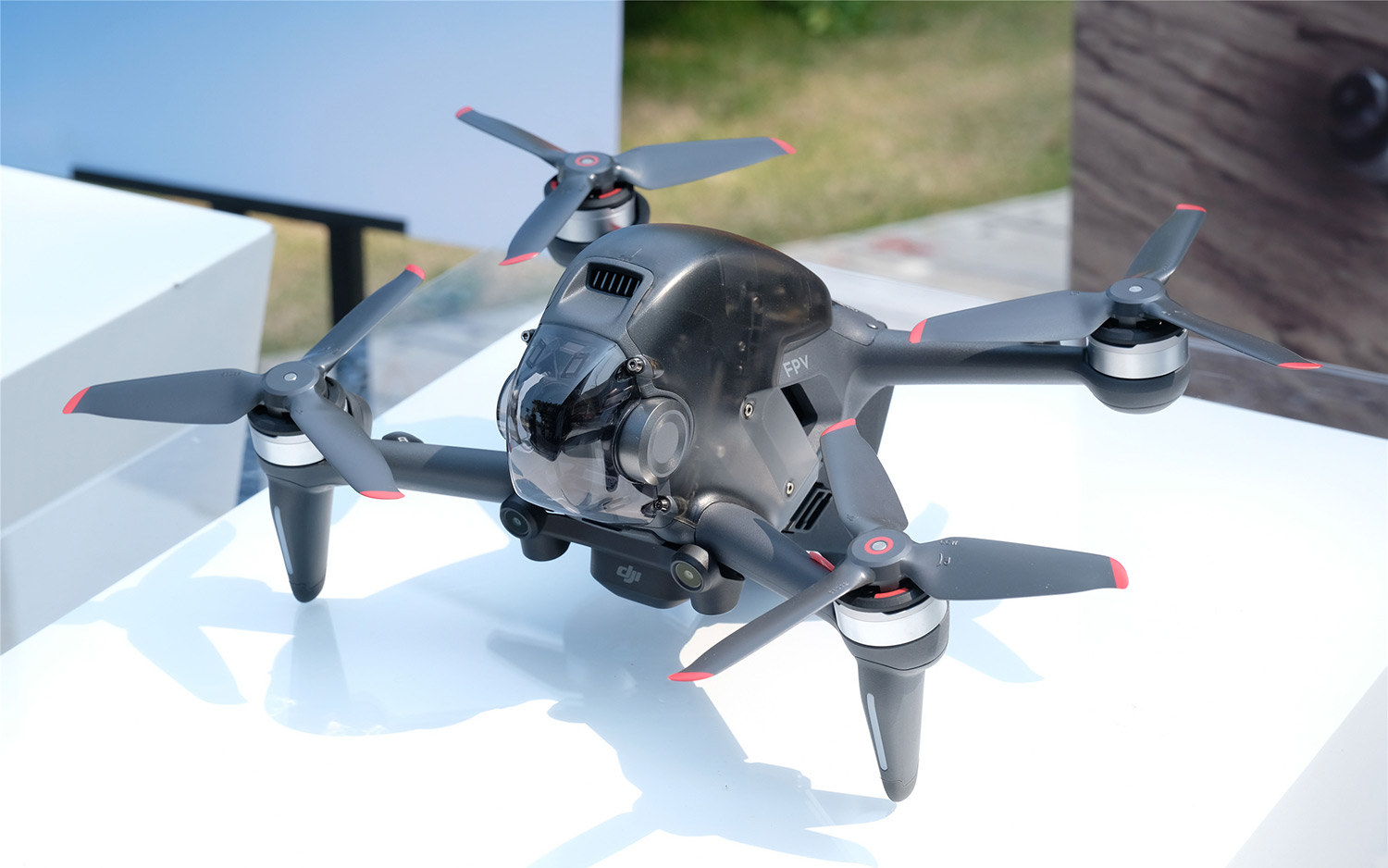
Dry air tightness testing has become the standard solution for waterproof quality control in the drone industry.

WeChat for technical support

PLUS Douyin