In the wave of the new energy industry's transition toward "green hydrogen," hydrogen fuel cells, with their core advantages of high efficiency and zero carbon, have become a key power source in transportation, energy storage, industrial and other fields. As the "heart valve" of hydrogen fuel cells, the sealing performance of the bipolar plate directly determines the cell's leakage risk, energy conversion efficiency and service life. Once the bipolar plate seal fails, it will not only cause hydrogen leakage and pose a safety hazard, but also lead to electrolyte loss and bipolar plate corrosion, causing cell power attenuation of more than 30% and significantly increasing operation and maintenance costs. In response to this industry pain point, we have devoted ourselves to the research and development of hydrogen fuel cell testing technology and launched the "Hydrogen Fuel Cell Bipolar Plate Sealing Test Device" and its supporting standardized testing method, building a solid quality and safety defense line for the hydrogen fuel cell industry.
In the current field of hydrogen fuel cell plate sealing testing, two major core challenges are prevalent: First, traditional testing relies on crude methods such as the "bubble method" and "weighing method," which can only detect obvious leaks and are powerless against micro-leaks below 0.1 mL/h. However, the safety standards for hydrogen fuel cell plates require leakage to be controlled within 0.05 mL/h, and traditional methods are completely unable to meet the precision requirements. Second, plate specifications are diverse, ranging from small plates for passenger vehicles to large plates for commercial vehicles, with size differences exceeding 10 times. Traditional test fixtures have poor compatibility, and frequent fixture replacement leads to low testing efficiency, with a single plate test taking over 20 minutes, making it difficult to adapt to the pace of large-scale production.
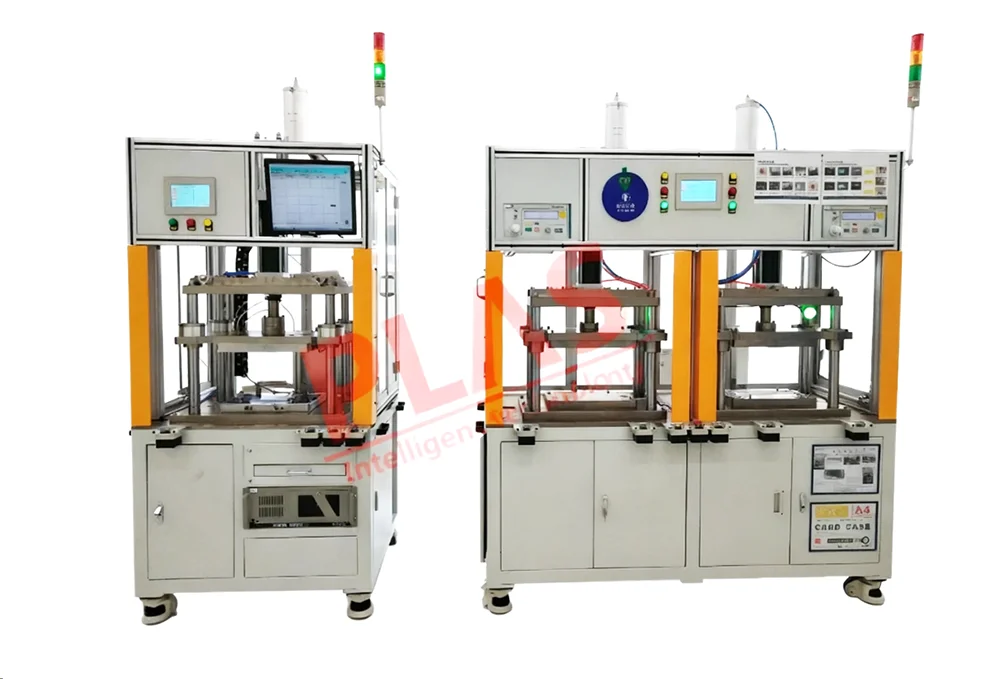
Our hydrogen fuel cell bipolar plate sealing test equipment is designed around the core concept of "ultra-precision testing, full-domain compatibility, and intelligent efficiency," fundamentally overcoming industry bottlenecks. The equipment incorporates three core technologies: First, it adopts dual-sensing technology combining "vacuum negative pressure + helium mass spectrometer leak detection" with a high-precision molecular pump group, achieving a leak rate detection accuracy of 0.001 mL/h—100 times that of traditional methods—precisely capturing potential hazards such as micro-cracks on bipolar plate sealing surfaces and sealant aging. Second, it features an innovatively developed "flexible adaptive sealing chamber" that, through a combination of pneumatic pressing and silicone gasket design, can adapt to bipolar plate sizes ranging from 50 mm to 500 mm and is compatible with different bipolar plate structures such as flat-plate and corrugated types, requiring no fixture replacement and achieving a 100% compatibility rate. Third, it integrates an industrial-grade intelligent control system equipped with a 10-inch touchscreen and an AI data processing module, supporting one-touch retrieval of test parameters and visualized leak point localization. Test data automatically generates ISO-standard reports and can be directly connected to enterprise ERP systems, enabling full-process data management from production to traceability.
To ensure the scientific validity and authority of test results, we have established a four-step closed-loop testing process based on GB/T 38946-2020 "Technical Requirements for Fuel Cell Stacks for Hydrogen Fuel Cell Vehicles," covering full-cycle quality control of bipolar plate production:
Step 1: Electrode plate pre-treatment and positioning. The device is equipped with an automatic cleaning module that uses high-pressure airflow in combination with a lint-free cloth to remove oil, metal debris and other contaminants from the electrode plate surface, preventing any impact on sealing fit. Operators simply place the electrode plate into the test chamber, and the system automatically identifies the plate model via vision positioning technology, completing seal chamber air pressure adjustment and positioning fixation within 10 seconds, with a positioning accuracy of ±0.1 mm, eliminating manual operation errors.
Step 2: Multi-condition sealing performance test. The system supports switching between vacuum mode and pressure mode to meet the requirements of different test scenarios: In vacuum mode, the test chamber forms a -0.095MPa negative pressure environment, simulating the negative pressure state during fuel cell operation, to detect the sealing performance on the inner side of the bipolar plate; in pressure mode, inert gas is injected into the sealing chamber to 0.1-0.3MPa, matching the actual working pressure of the bipolar plate, to precisely detect the sealing reliability on the outer side. During the test, the helium mass spectrometer sensor collects 100 sets of data per second, and the AI algorithm plots the leak rate variation curve in real time, simultaneously marking abnormal fluctuation points. The entire test process takes only 3 minutes, improving efficiency by 85% compared with traditional methods.
Step 3: Intelligent judgment and data traceability. After the test is completed, the system automatically determines "pass/fail" based on preset standards and outputs a detailed data report, including leak rate values, coordinates of abnormal points, test condition parameters, and other information. All data can be stored locally with a capacity of more than 100,000 records, and can also be uploaded to a cloud database via a 5G module to generate a unique traceability QR code. Scanning the code allows access to the complete test record, fully meeting the IATF16949 quality system requirements of the automotive industry.
Step 4: Failure analysis and process feedback. For non-conforming plates, the system can trigger an industrial camera to capture high-resolution images of the abnormal points, helping technicians quickly identify the cause of sealing failure—whether it is uneven sealant application, plate warping or deformation, or insufficient assembly pressure. The system has a built-in process optimization database that automatically pushes improvement recommendations based on the failure type, helping companies reduce the defect rate at the source.
The device and its testing method have been authoritatively verified by the China Automotive Engineering Research Institute (CAERI) and are now in use on the production lines of several leading hydrogen fuel cell companies. After a commercial vehicle fuel cell manufacturer introduced this equipment, the bipolar plate sealing defect rate dropped from 2.8% to 0.08%, reducing annual scrap losses by more than RMB 8 million per production line. A core fuel cell component manufacturer, leveraging its precise testing capability, successfully resolved batch leakage issues in bipolar plates and passed the supplier qualification certification of an OEM. Its application scenarios cover the entire process, including factory inspection of bipolar plate production, pre-assembly inspection of fuel cell stacks, and sampling inspection for after-sales operation and maintenance, providing full life-cycle quality assurance for the hydrogen fuel cell industry.
As the "dual carbon" goals advance in depth, the hydrogen fuel cell industry is entering a phase of large-scale explosive growth, and bipolar plate quality directly determines the foundation of the industry's development. Our hydrogen fuel cell bipolar plate sealing test equipment breaks the monopoly of foreign testing equipment through technological innovation, reducing testing costs by 40% while achieving breakthroughs in both accuracy and efficiency.

WeChat for technical support

PLUS Douyin